 EN
EN NL
NLIntelligent Leadership Executive Coaching
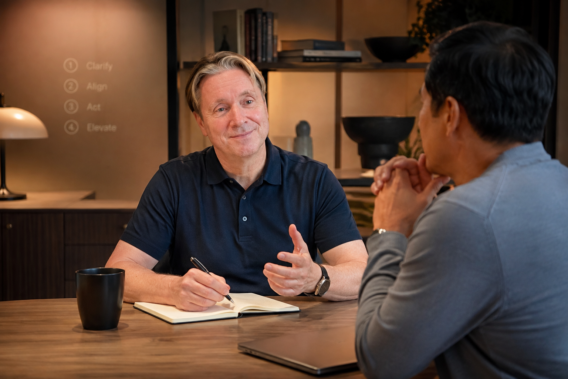
Leadership in Context means exploring the relationship between the person, the role, the organization, its culture, and the question at hand. We examine how your convictions and experience meet the expectations surrounding you, and what that makes possible for your leadership.
This six-month engagement for senior leaders combines individual coaching, leadership assessments, and stakeholder feedback. We work with the questions you are facing, interpret findings within your circumstances, and agree development priorities to explore in practice.
As an Intelligent Leadership Master Certified Coach, I use John Mattone Global’s licensed methodology and tools within this approach.
Your role and the expectations around it
My leadership experience and doctoral research inform my interest in how language, identity, and culture shape organizational life. In coaching, we explore how your role is understood, whose expectations carry weight, and how you participate in sustaining or changing them.
Shared expectations help people work together. They also shape what is recognized as credible leadership. Even authenticity can become something you are expected to express in an approved way.
We examine what your role enables, how you understand yourself within it, and where its expectations deserve reconsideration. Paying attention to the language used to describe a situation can reveal possibilities that familiar explanations have obscured.
Personal foundations and leadership in practice
Intelligent Leadership uses the terms inner core and outer core to explore the relationship between personal foundations and the leadership others experience.
The inner core concerns character, values, self-concept, thinking patterns, and emotional responses. The outer core concerns the capabilities, behaviors, and decisions through which you lead.
Assessments can suggest patterns to explore. Stakeholder feedback offers perspectives on your contribution. We consider both alongside your own account and the circumstances in which those patterns appear, examining differences as well as points of agreement.
When this approach can help
- Taking on a role with different responsibilities and stakeholder expectations.
- Leading change where familiar habits, relationships, or assumptions need examination.
- Understanding differences between your intentions and how others experience your leadership.
- Working across organizational, professional, or cultural boundaries.
- Strengthening your influence, executive presence, or approach to decision-making.
- Developing a particular aspect of your leadership through structured inquiry and feedback over time.
How we work over six months
The Intelligent Leadership process follows four stages: Awareness, Analysis, Action, and Achievement. Our conversations connect this structure to your responsibilities and the situations you are working through.
Awareness
We begin with your leadership questions and the circumstances that make them important. We agree objectives and how to assess progress. Where an organization sponsors the coaching, we agree the roles and what progress information can be shared. The content of individual conversations remains confidential.
The Mattone Leadership Enneagram Inventory (MLEI)® explores inner-core patterns. The Strategic-Tactical Leadership Index-360 (STLI-360)® gathers stakeholder perspectives on your visible leadership capabilities and impact.
Analysis
We bring together the assessments, your experience, and stakeholder interviews. We examine where accounts converge or differ, the situations they describe, and what may explain the differences.
This includes exploring expectations around your role and the relationship between what you intend and what others experience. Together, we identify the questions and priorities that deserve attention.
Action
We agree a small number of development priorities and translate them into a Core Purpose Statement and an Individual Leadership Development Plan.
Coaching connects those priorities to current decisions and relationships. You try agreed actions in your work; we return to what happened, how others responded, and what you learned. Those observations help shape what you do next.
Achievement
LeaderWatch® gathers periodic stakeholder feedback on the agreed development priorities. We review it alongside your decisions, behavior, and experience to assess what is changing and where further attention is useful.
Progress review continues throughout the engagement, allowing us to adjust the work as your circumstances develop.
Optional elements
Additional assessments, the Intelligent Leadership Online Academy, or leadership shadowing can be included where they are relevant to your question. We agree their purpose and practical arrangements before including them.
What counts as progress
A result is measurable when change can be assessed against explicit criteria, using a consistent method and evidence that allows comparison over time.
Those criteria follow from your leadership question. We might examine where decision authority sits, how frequently you intervene, or whether colleagues experience greater room to act. We agree how to gather and compare the evidence.
The criteria themselves deserve attention. We ask what we are treating as progress and whose experience informs that judgment. If circumstances call for revised priorities, we make that change explicit.
Explore whether this approach fits your question
A first confidential conversation begins with your circumstances and what you would like to explore. We can consider whether this structured engagement or the more flexible Executive Coaching service fits your question. Both are grounded in my Leadership in Context perspective.
Sessions can take place online, in person, or in motion. Executive Hitchhiking can form part of the engagement when walking or suitable travel offers useful space for reflection.
- Licensed by:
- John Mattone Global

- Duration:
- 6 months
A structured coaching process that brings assessments and stakeholder feedback into conversation with your experience. We interpret the findings within your role and circumstances, agree development priorities, and use feedback over time to examine how others experience changes in your leadership.
• MLEI® and STLI-360® assessments
• Stakeholder interviews
• Individual Leadership Development Plan
• One-to-one executive coaching
• Periodic LeaderWatch® feedback
• Optional additional assessments or shadowing