 EN
EN NL
NLMeet Vincent Pieterse
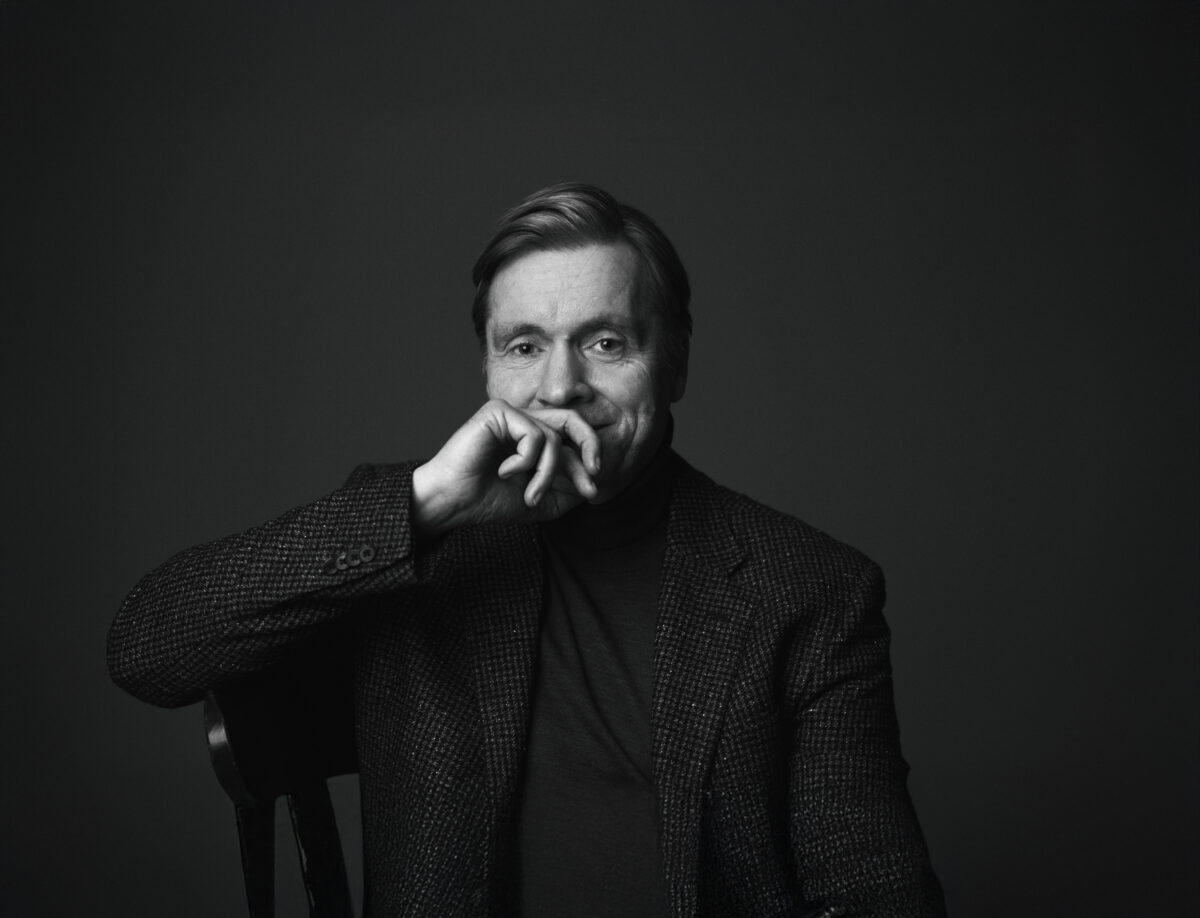
I’m Vincent Pieterse, an executive coach, former senior executive, researcher, and author. Through The Hubler, I work with CEOs, executives, entrepreneurs, and government leaders who want a confidential thinking partnership around the questions they are facing.
My coaching is grounded in Leadership in Context. We explore how your convictions and experience meet the responsibilities of your role, the organization and its culture, and the question at hand. My own leadership experience and research inform that conversation.
Experience inside organizations
My career began in 1987 as a teacher at a school for children with special needs. I served as its principal from 1994 to 1997. I was responsible for educational teams, school policy, educational quality, institutional governance, and financial oversight. It gave me direct experience of how professional judgment and stakeholder expectations meet organizational responsibility.
At de Baak Institute for Leadership and Entrepreneurship, I later held roles as Program Director and Business Unit Director, combining organizational responsibility with developing leadership programs and working with leaders from other organizations. My university work at Leicester included serving as Director of the MSc in Management and MBA in Biotechnology programs, alongside lecturing and supervising MBA and MSc dissertations. Across these settings, leadership practice and learning were closely connected: I was responsible for educational work while helping others examine how they led and organized.
Across more than a decade in senior leadership roles, I had to exercise judgment with incomplete information and competing interests. A leader’s room to act also depends on relationships, organizational history, and expectations that may never have been made explicit. That experience still informs the attention I bring to a coaching conversation.
Research into leadership and organizational life
My doctoral research, From artist-as-leader to leader-as-artist, examined how artistic ideals such as freedom, creativity, and authenticity became expectations within contemporary leadership. Drawing on the work of Dutch poet and performer Simon Vinkenoog, I explored the tensions those expectations create.
Leaders may be expected to adapt while appearing consistent. They are invited to express a personal voice, yet find that others have strong ideas about what credible leadership should look like. The relationship between personal convictions and recognition by others remains a question in my coaching.
Shared roles and familiar ways of speaking help people coordinate their work. They also shape who can speak and what counts as responsible action. People can fulfill a role sincerely while questioning its limits. I am interested in how a leader participates in these patterns and what it means to reconsider them.
Huizinga’s writing on play also informs how I think about participation in organizational life. In my interpretation, commitment to shared rules and questioning them can coexist. Thoughtful disagreement may express commitment to an organization’s purpose even when others receive it as disloyalty.
What I bring to the conversation
I attend to the words used to describe a situation and the expectations surrounding your role. We explore whose judgments influence the question, where familiar explanations have become restrictive, and what responding differently might involve.
Coaching also asks me to examine my own assumptions. Experience can offer another perspective, but it can also make one interpretation seem more obvious than it deserves. We can question my reading of the situation as well as yours.
We stay connected to the business and organizational reality you are working with. Together, we agree what progress would mean and how to gather evidence that can be compared over time.
Working across contexts
Across more than 25 years of international work, I have coached Fortune 500 executives, CEOs, ministers, senior officials, entrepreneurs, and emerging leaders in Europe, the United States, the Middle East, and Asia.
I consider cultural influences alongside the organization, profession, role, and personal history. A national pattern can be useful to consider, but it deserves examination within the circumstances of the person in front of me. An interpretation that makes sense in one setting may need reconsideration in another.
These questions also inform my writing on leadership, culture, and organizational life, including work published through IMD Coaching Corner and Forbes Coaches Council.
A curiosity that began early
My curiosity about how people understand the world has roots in my upbringing. My father worked for the European Space Agency, and I grew up around families from Western and Southern Europe, the United States, Asia, and Australia. Different habits, assumptions, and ways of seeing were part of everyday life.
That experience helped shape my interest in how a person’s identity and cultural surroundings influence the way they lead and follow. I carried that interest into my own leadership roles, academic research, coaching, and writing. My doctoral work gave me a way to examine more closely how people make meaning within organizations, and how power, values, and identity shape what is expected of a leader and whose view carries weight.
What continues to interest me is the tension between a person’s convictions and the structures and expectations around them. In a coaching conversation, I listen for what matters to you and pay attention to the organizational and social world in which you are trying to lead. Understanding that relationship can help us see why a question persists, where you have room to act, and what a different response would ask of you.
The name The Hubler
The name The Hubler was inspired by Ludovic Hubler’s five-year hitchhiking journey around the world. He chose hitchhiking as a way to meet people and discover their realities, relying on trust and adapting to encounters he could not predict. The image of being on the move gave a name to a way of understanding leadership that had developed through my own experience and research.
For me, leadership is an ongoing human journey. Experience changes how you understand yourself, what you stand for, and how you relate to others. You make choices within circumstances that you can only partly influence, and those choices shape the contribution you make and what you leave behind. Character matters in that process: how you remain connected to your values, respond when they are tested, and stay open to learning from people whose view differs from your own.
That is also how I understand the coaching relationship. I accompany you for part of the route, bringing questions, observations, and my experience of leadership. Curiosity keeps us open to what we have yet to understand. Trust makes it possible to speak about doubt or disagreement, and to examine convictions that may be difficult to question elsewhere. There can be courage in staying with an uncomfortable question long enough to understand it. We reflect together, and you decide what to try in practice. The choices and responsibilities remain yours.
Usually, being on the move describes a change in understanding: making space to see a familiar situation differently and finding a considered way forward. Through Executive Hitchhiking, it can also be literal, with a coaching conversation while walking or traveling together. A change of setting can create some distance from the working day. The value lies in what you can bring back to the relationships and responsibilities in which you lead.
Professional background
- PhD with research focused on leadership and organizational culture
- ICF Professional Certified Coach (PCC)
- Executive Coach with IMD Business School
- Intelligent Leadership Master Certified Coach with John Mattone Global
- Former Business Unit Director, Program Director, and Associate at de Baak Institute for Leadership and Entrepreneurship
- Former principal of a school for children with special needs
- Honorary Fellow of the University of Leicester; former Director of its MSc in Management and MBA in Biotechnology programs
- Certified in Hogan Assessments and the NEO Personality Assessment
- Member of EMCC Global and the Dutch Order of Professional Coaches (NOBCO)
- In 2026, Global Gurus ranked me #10 in its World’s Top 30 Coaching Professionals
Start with a conversation
We begin with your circumstances and what you would like to explore. The question can take shape as we speak, while we consider whether working together would be useful.